The short version
- Replacing a pump in an existing pit costs less than a new installation, which may mean digging a new pit, sometimes through a concrete floor.
- Published national figures: Bob Vila, citing Angi, puts typical sump pump costs at $1,200 to $2,500 (average $1,500), without splitting replacements from new installations. A new installation in a concrete floor can cost far more.
- A battery backup can keep pumping during a power outage. Angi’s installed range is $640 to $2,000.
- Test it. Pour water into the pit to make sure the pump turns on and off, and check that the discharge goes well away from the house.
What a sump pump does
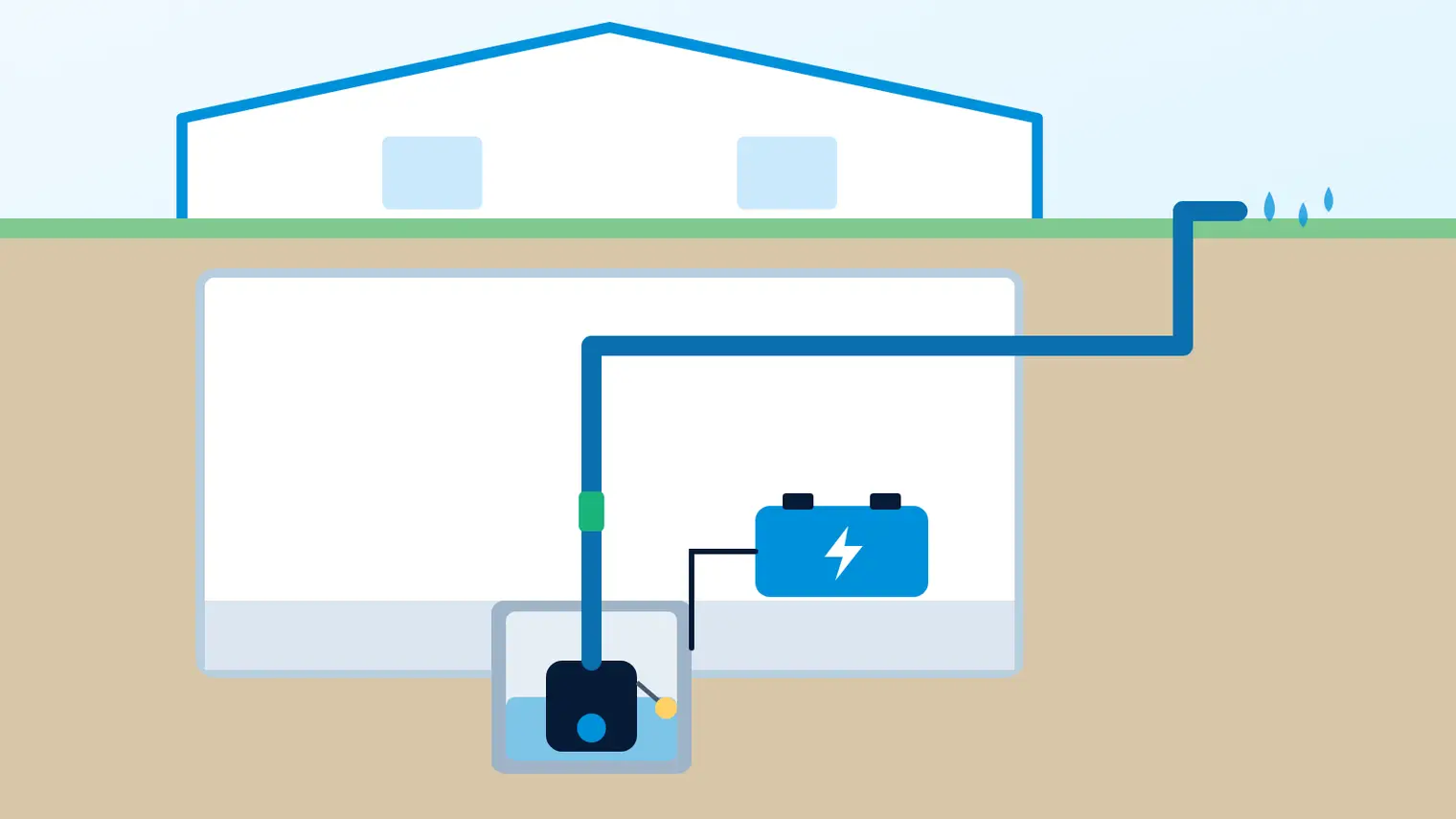
A sump pump sits in a pit (the “sump”) in the lowest part of a basement or crawl space. When water collects in the pit, a float switch turns the pump on, and it pushes the water out through a discharge pipe away from the house. Its job is to keep groundwater from building up and getting into the basement. If it fails during heavy rain, the result can be a wet basement, and a water damage restoration bill.
Pedestal vs. submersible pumps
| Pedestal | Submersible | |
|---|---|---|
| How it sits | Motor stands above the pit; only the pump end is in the water | The whole unit sits in the water inside the pit |
| Unit cost (Bob Vila) | $60 to $170 | $100 to $400 |
| Average lifespan (Bob Vila) | About 20 to 25 years | About 5 to 15 years (some higher-quality pumps 10 to 30 years) |
A pump’s price is only part of the cost. Installation, the pit, piping and any electrical work usually cost more than the pump itself.
Replacement vs. new installation
- Replacing a pump in an existing pit is the simpler job. Bob Vila says a replacement usually takes about an hour and costs less than a first-time installation, but gives no separate replacement price.
- A new installation means creating a pit and a discharge route. Bob Vila says it can take 2 to 4 hours, and the floor makes a big difference. Its estimates: about $300 to $500 just to dig through a dirt floor, and $2,500 to $5,000 for a complete installation in a concrete floor.
- Drainage systems are a bigger project. Bob Vila estimates $4,000 to $12,000 to update or dig a new drainage system.
Published price ranges
These are national estimates from one home-improvement publisher (Bob Vila, article updated January 12, 2024) and one home-services marketplace (Angi). They aren’t PocketWiseLab research or a quote. Prices vary by location and by job.
| Item | Estimate | Source |
|---|---|---|
| Typical overall sump pump cost (replacements and new installations not separated) | $1,200 to $2,500 (average $1,500) | Bob Vila, citing Angi |
| Labor | $45 to $200 per hour | Bob Vila; Angi |
| Digging a new pit in a dirt floor (excavation only) | $300 to $500 | Bob Vila |
| New installation in a concrete floor (complete job) | $2,500 to $5,000 | Bob Vila |
| Repairs | $200 to $500 on average | Bob Vila |
| Battery backup, installed | $640 to $2,000 (average $1,220) | Angi |
| Water-powered sump pump (unit price) | $100 to $700 | Bob Vila |
Battery backup and other backup options
A primary pump runs on household electricity, so it stops during a power outage, often just when storms make it most needed. North Dakota State University (NDSU) Extension says a backup pump should “kick in” when the main pump fails or the power goes out. The flood-safety nonprofit FLASH also recommends adding a sump pump with backup power.
- Battery backup pumps run on a battery kept charged from household power. NDSU notes that backup pumps and their electrical systems need regular maintenance and checks, just like the main pump.
- Water-powered backups use the home’s water pressure instead of a battery (Bob Vila). Because they depend on your home’s water supply, ask a plumber whether one suits your home and local code.
- A generator is another option for keeping the pump running in an outage (FLASH). Run it only outdoors, more than 20 feet from any window, door or vent, and never in a garage, even with the door open (CDC).
Maintenance: a simple routine
NDSU Extension recommends testing your pump:
- Unplug the pump, then check the intake and outlet. Sump pumps don’t have filters, but their screens or intake openings can get plugged. Make sure the outlet pipe is clear, then plug the pump back in.
- Pour water into the pit slowly, at about the speed water normally flows in, and watch the float rise and the pump start. NDSU suggests cycling it on and off at least twice.
- Check for a check valve on the discharge pipe. Without one, water can flow back into the pit and make the pump cycle more often than it needs to, which can shorten its life.
- Check where the water goes. NDSU says sump water should preferably be discharged at least 20 feet from the house, and not onto a neighbor’s lot, into window wells, or onto a septic drain field.
- Check the backup too, if you have one.
Before you reroute a discharge line, check local rules. NDSU notes that many communities prohibit sending sump water into the sanitary sewer, and that homes with septic systems should never pump sump water into the basement floor drain.
Repair or replace?
There’s no single rule, but these signs point toward replacement:
- Age. NDSU says some manufacturers recommend replacing the switch and float every two years, and the pump every five years. Lifespans vary by type (see the table above).
- It fails a test (doesn’t start, doesn’t shut off, or runs constantly), or it fails repeatedly.
- The repair costs a large share of a new pump plus installation.
A failed float switch or a clogged intake may be a simpler fix than replacing the whole pump.
Questions to ask before you hire
- Is this a replacement or a new installation, and what does the quote include: pump, pit or basin, check valve, discharge piping and electrical work?
- Pedestal or submersible, and why for my home? What capacity do you recommend?
- Where will the water discharge, and does that meet local rules?
- Do you recommend a battery or water-powered backup? What does it cost to install and maintain?
- Is a permit needed? Bob Vila notes some cities require one.
- What warranty comes with the pump and the work?
- What licenses and insurance do you carry? Requirements vary by state and city, so check them yourself.
Related guides and tools
- Water damage restoration cost: what to do if water gets in anyway.
- Mold remediation cost: damp basements are a common place for mold.
- Home Maintenance Budget Calculator: plan a monthly amount for repairs and replacements like this one.
Sources and further reading
- NDSU Extension — Sump Pump Questions (AE1573) (reviewed August 2021)
- Bob Vila — sump pump cost guide (Katie Flannery; published August 10, 2021; updated January 12, 2024)
- Angi — sump pump battery backup cost guide (no date shown on the page)
- FLASH (Federal Alliance for Safe Homes) — Add a Sump Pump with Backup Power
- U.S. Environmental Protection Agency — Flood Cleanup: Protecting Indoor Air Quality (generator safety)
- Everbilt Submersible Sump Pump Use and Care Guide (Rev. 05/20/17) (electrical safety)
- Centers for Disease Control and Prevention — Carbon Monoxide Poisoning Basics (generator distance)
All sources above were last checked on November 23, 2026. Prices change and vary by location; get written quotes for your own job.
Editorial note: Price figures are third-party national estimates, not quotes or PocketWiseLab research. This guide is general information, not professional plumbing or electrical advice. Follow the manufacturer’s instructions and local codes, and use a qualified professional for electrical work.
This guide is general information, not financial, tax, legal, insurance, or engineering advice. Prices, rates, and programs vary by location and change over time — confirm details with your provider or a qualified professional.